
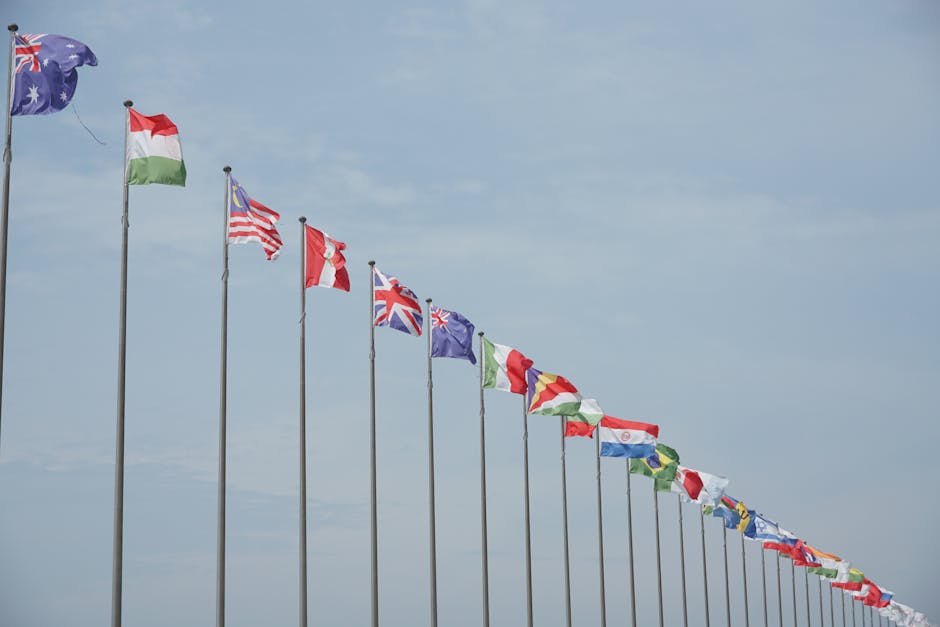
The Future of Global Alliances in an Unstable World
The international order that has defined global politics for the past seven decades is undergoing a profound transformation. Traditional alliances face unprecedented challenges from rising powers, technological disruption, climate change, and shifting economic centers of gravity. As nations navigate this turbulent landscape, the future of global alliances will determine not only the balance of power but also humanity’s collective ability to address transnational threats that recognize no borders.
The Evolving Nature of Alliance Systems
The post-World War II alliance architecture, anchored by institutions like NATO, the United Nations, and various bilateral security agreements, was designed for a different era. These structures emerged from the ashes of global conflict and were solidified during the Cold War’s ideological divide. Today, the international system faces a more complex reality where traditional military alliances must adapt to encompass economic interdependence, cyber security, pandemic response, and environmental cooperation.
Modern alliances are increasingly characterized by flexibility and issue-specific cooperation rather than rigid ideological or military blocs. Nations find themselves aligned with different partners depending on the challenge at hand, creating overlapping networks of cooperation that can both strengthen international stability and generate new tensions when interests diverge.
The Multipolar Reality
The unipolar moment that followed the Cold War’s end has given way to a multipolar world where power is distributed among several major actors. This shift fundamentally alters how alliances function and form. The United States, while still militarily dominant, no longer enjoys uncontested economic and diplomatic supremacy. China’s rise as an economic powerhouse and increasingly assertive global actor has created an alternative pole of influence. Meanwhile, regional powers such as India, Brazil, and Turkey pursue their own interests with growing independence.
This multipolarity creates opportunities for middle powers to exercise greater autonomy and forge diverse partnerships. However, it also increases the risk of miscalculation and conflict as established powers resist perceived challenges to their influence while rising powers seek recognition and space for their expanding interests.
Challenges Facing Traditional Alliances
Established alliance systems confront several critical challenges that will shape their future relevance and effectiveness:
- Domestic Political Instability: Rising nationalism and populism within member states question the value of international commitments and collective security arrangements. Political polarization makes it harder for governments to maintain consistent foreign policy positions and honor alliance obligations.
- Economic Competition Among Allies: Trade disputes and economic rivalry between traditional partners strain relationships built primarily on security cooperation. The intertwining of economic and security interests creates complex situations where allies may be simultaneously partners and competitors.
- Diverging Threat Perceptions: Alliance members increasingly disagree on which challenges deserve priority attention. While some focus on traditional military threats, others emphasize climate change, migration, or economic security, complicating efforts to maintain unified strategies.
- Technological Disruption: Advances in artificial intelligence, quantum computing, and biotechnology create new security dilemmas that existing alliance frameworks were not designed to address. The race for technological supremacy introduces new dimensions of competition and cooperation.
Emerging Patterns of Cooperation
Despite these challenges, new forms of international cooperation are emerging that may define future alliance structures. Minilateral arrangements bringing together small groups of nations to address specific issues have gained prominence. These flexible coalitions can act more quickly than large institutional alliances and adapt more readily to changing circumstances.
The Quad partnership among the United States, Japan, India, and Australia exemplifies this trend, focusing on Indo-Pacific security and development without the formal treaty obligations of traditional alliances. Similarly, climate coalitions unite nations across traditional geopolitical divides around shared environmental goals.
The Role of Non-State Actors
The future of global alliances cannot be understood without acknowledging the growing influence of non-state actors. Multinational corporations, international NGOs, and transnational advocacy networks increasingly shape global governance alongside traditional state actors. Technology companies exercise power that rivals many nations, controlling critical infrastructure and data flows that underpin modern economies.
Future alliance structures will need to incorporate mechanisms for engaging these actors, whose cooperation is often essential for addressing challenges from climate change to cyber security. This represents a fundamental shift from the state-centric alliance model that has dominated international relations.
The Path Forward
The future of global alliances will likely be characterized by several key features. First, successful alliances will demonstrate adaptability, updating their missions and methods to address contemporary challenges while maintaining core commitments. Second, effective alliances will embrace inclusivity, creating mechanisms for engaging diverse stakeholders beyond traditional state actors.
Third, future alliances must balance flexibility with reliability. While issue-specific coalitions offer advantages, the international system still requires stable, predictable commitments among major powers to prevent conflict and maintain order. Fourth, successful partnerships will increasingly integrate multiple dimensions of cooperation, recognizing that security, economic, environmental, and technological challenges are interconnected.
Conclusion
The future of global alliances in an unstable world remains uncertain, but their importance is undeniable. As humanity faces challenges that transcend borders and require collective action, the ability of nations to forge effective partnerships will determine whether we successfully navigate the turbulent decades ahead. The alliances that emerge from this period of transformation may look different from their predecessors, but their fundamental purpose remains unchanged: to provide security, prosperity, and stability through cooperation in an interconnected world. The question is not whether alliances will remain relevant, but whether they can evolve quickly enough to meet the demands of a rapidly changing global landscape.