
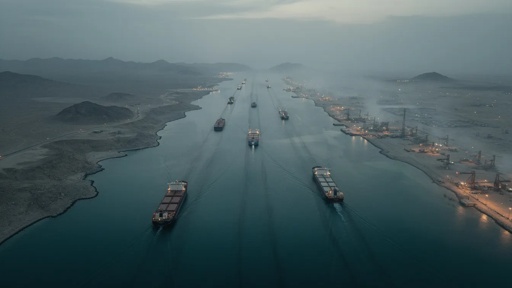
The Philippines just became the first nation to declare a national energy emergency in response to Iran’s blockade of the Strait of Hormuz, and what happens next could reveal whether the rest of Asia is standing on the edge of a similar cliff.
From Denial to Emergency in 24 Hours
On March 23, 2026, President Marcos assured the public there was no oil crisis. Twenty-four hours later, he signed an executive order declaring a state of national energy emergency. The abrupt reversal speaks to the speed at which geopolitical chaos translated into existential threat for a nation that imports virtually all its fuel. The trigger was Iran’s retaliation for a February 28 US-Israel offensive that killed Supreme Leader Ali Khamenei and over 1,340 others. Iran’s response included seizing control of the Strait of Hormuz, the narrow waterway through which most Asian oil passes, effectively severing the Philippines’ energy lifeline.
The declaration activates what the government calls a whole-of-government mobilization. Executive Order No. 110 empowers authorities to manage distribution, prevent hoarding, issue subsidies, and build strategic reserves. The UPLIFT package directs targeted relief to transport workers, farmers, and micro, small, and medium enterprises facing soaring diesel costs. Yet the clock is ticking. With only 45 days of reserves and summer energy demand looming, the Philippines faces a narrow window to secure alternative supplies or weather a prolonged blockade that could exhaust stockpiles entirely.
The Canary in the Global Energy Coal Mine
The Philippines serves as an early warning system for what could unfold across energy-dependent Asia. The nation imports nearly all its fuel, with 26% sourced from Middle Eastern suppliers like Saudi Arabia, the UAE, Kuwait, and Iraq. That dependence totaled $16 billion in 2024 alone. When the Strait of Hormuz closed, the Philippines lost access to its primary crude and refined product sources. Compounding the crisis, regional suppliers in the Asia-Pacific, including China, restricted fuel and fertilizer exports to preserve their own reserves, turning what might have been a temporary disruption into a bidding war.
Analysts describe the Philippines as the first domino. If the blockade persists for two to three months, the ripple effects could cascade globally, destabilizing supply chains, spiking prices, and forcing other import-reliant nations into similar emergency declarations. The timing could not be worse. Summer demand typically strains energy infrastructure, and the Philippines now faces peak consumption with dwindling reserves. Airlines have already suspended flights through October, and refineries are cutting production rates to stretch remaining crude inventories. The economic and social tremors are intensifying.
A Government Scrambling to Build Buffers
The Marcos administration’s emergency measures reflect both urgency and the limits of leverage. The government plans to establish a $500 million diesel buffer fund, though securing supplies in a market dominated by regional hoarding and inflated prices remains uncertain. Temporary release of strategic reserves buys time, but only if the Strait of Hormuz reopens or alternative suppliers emerge. Export curbs, anti-hoarding enforcement, and subsidy programs aim to stabilize domestic prices and prevent panic, yet these tools cannot conjure fuel where supply chains have been severed.
The political stakes are significant. Marcos’ credibility took a hit with the denial-to-emergency whipsaw, and his administration now faces the test of delivering results under intense public scrutiny. Protests over diesel prices erupted before the declaration, and the suspension of flights signals broader disruptions in logistics, manufacturing, and agriculture. Fertilizer shortages threaten food security, and urban consumers already contend with higher costs for goods dependent on transport. The emergency centralizes executive power, enabling rapid mobilization, but it also concentrates accountability. If reserves run dry or the blockade drags on, the political fallout will be severe.
What Happens If the Strait Stays Closed
The optimistic scenario hinges on a swift resolution to the Middle East conflict and the reopening of the Strait of Hormuz. Temporary reserve releases and targeted subsidies could suffice if normalcy returns within weeks. The pessimistic view is harder to dismiss. A prolonged closure stretching two to three months would exhaust Philippine reserves and force impossible choices: rationing that cripples the economy or importing at prohibitive costs that drain national coffers and spike inflation. The broader risk extends beyond the Philippines. If the first country to declare an emergency cannot stabilize, others in similarly vulnerable positions will face mounting pressure to follow suit.
The conflict’s origins in a US-Israel offensive complicate any clean resolution. Iran’s blockade serves as leverage, a bargaining chip in a high-stakes standoff where the Philippines holds no cards. The nation’s alignment with US allies offers no insulation from the economic consequences of their military decisions. Gulf exporters remain inaccessible, regional suppliers hoard their own stocks, and global markets brace for prolonged uncertainty. For a nation of over 110 million people dependent on imported energy, the margin for error has evaporated. The world is watching to see whether the Philippines can navigate this crisis or whether it becomes the first of many nations forced to confront the fragility of global energy networks in an era of escalating geopolitical conflict.
Sources:
Philippines becomes 1st country to declare energy emergency due to Mideast conflict – Anadolu Agency
Philippines News Agency – Government Official Article
Marcos declares state of national energy emergency – ABS-CBN News
When Iranian President Ahmadinejad said that only after Iran had destroyed the US would Iran then be able to destroy Israel, this was a declaration of war. To do this, Iran needs missiles and nuclear weapons.
We need to end this war as we had to end World War II in Europe.
The US needs to pass a formal declaration of war against Iran and all Iranian proxies. Talking with fanatics is a total waste of time.