
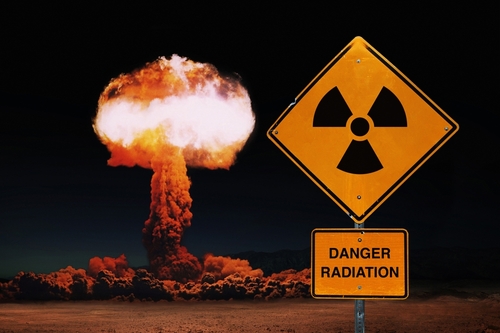
Nine nations possess nuclear arsenals totaling over 13,000 warheads in 2026, with Russia and the United States controlling 90% of the world’s most devastating weapons—a stark reminder that global security remains concentrated in the hands of just two superpowers.
The Nuclear Powers: Complete 2026 Inventory
Nine sovereign states possess nuclear weapons capability as of March 2026. Russia maintains the world’s largest arsenal with 5,459 warheads, followed closely by the United States with 5,177 warheads. Among the remaining nuclear powers, China holds 600 warheads, France maintains 290, and the United Kingdom possesses 225. India and Pakistan each control approximately 180 and 170 warheads respectively, while Israel maintains an estimated 90 warheads despite never formally acknowledging possession. North Korea rounds out the list with approximately 50 warheads.
Treaty Framework Reveals Dangerous Gaps
The Non-Proliferation Treaty officially recognizes five “nuclear-weapons states”: the United States, Russia, the United Kingdom, France, and China. These nations developed nuclear capabilities between 1945 and 1964. However, this framework has proven ineffective at preventing proliferation. India, Pakistan, and North Korea developed nuclear weapons entirely outside the NPT structure, with India first testing in 1974, Pakistan in 1998, and North Korea in 2006. Israel acquired nuclear weapons around 1967 but maintains a policy of strategic ambiguity. Article VI theoretically obligates recognized nuclear states not to maintain these weapons indefinitely, yet this commitment remains unfulfilled after decades.
China’s Rapid Arsenal Expansion Shifts Global Balance
China is undergoing significant modernization and expansion of its nuclear capabilities, representing a strategic concern for American national security. U.S. Department of Defense officials confirm China possessed more than 600 operational warheads as of December 2024, with projections indicating the arsenal will reach 1,000 nuclear weapons by 2030. The Stockholm International Peace Research Institute documented China’s stockpile increased by 90 warheads during 2023 alone. This rapid expansion fundamentally alters the strategic balance that has defined nuclear deterrence for generations, transitioning from a bipolar American-Russian dynamic to a three-power nuclear reality.
North Korea’s Rogue Nuclear Program Escalates
North Korea officially declared itself a nuclear weapons state on September 9, 2022, formalizing its status outside international regulatory frameworks. The regime conducted more than 90 ballistic missile tests during 2022—the highest number in a single year—demonstrating both capability and intent. Estimates regarding North Korea’s arsenal vary from 30 to 50 warheads, reflecting the inherent uncertainty surrounding the hermit kingdom’s weapons program. North Korea initially acceded to the NPT in 1985 but announced withdrawal in 2003, rejecting international oversight entirely. This rogue nuclear program represents an ongoing threat to regional stability and demonstrates the limits of international treaties when confronting determined adversaries.
Deployed Weapons and Strategic Positioning
The United States maintains 1,670 deployed strategic nuclear warheads and 100 deployed nonstrategic warheads, representing America’s commitment to deterrence and global stability. Russia maintains 1,718 deployed strategic warheads. France deploys 280 warheads and the United Kingdom 120, maintaining independent deterrent capabilities. Beyond the nuclear-armed states themselves, six non-nuclear nations host U.S. nuclear weapons: Belgium, Germany, Italy, the Netherlands, Turkey, and Belarus, which began hosting Russian tactical nuclear weapons in 2023. The United States maintains operational control of hosted weapons, ensuring responsible command authority while supporting allied defense planning.
Humanitarian Consequences Underscore Deterrence Necessity
Nuclear weapons possess destructive power exponentially greater than the bombs used on Hiroshima and Nagasaki in 1945. A single nuclear warhead detonated over New York would cause an estimated 583,160 fatalities according to current modeling. The approximately 13,080 nuclear warheads existing worldwide represent a significant reduction from Cold War peaks, demonstrating that responsible powers can reduce arsenals while maintaining deterrence. However, thirty-two states remain implicated in nuclear weapons issues through hosting arrangements or endorsement of nuclear defense strategies. Notably, Russia, North Korea, and Belarus have refused to sign or ratify the Treaty on the Prohibition of Nuclear Weapons, highlighting fundamental disagreements about nuclear deterrence policy.
Sources:
Nuclear Weapons By Country – World Population Review
Nuclear Arsenals – International Campaign to Abolish Nuclear Weapons
Nuclear Weapons: Who Has What at a Glance – Arms Control Association