
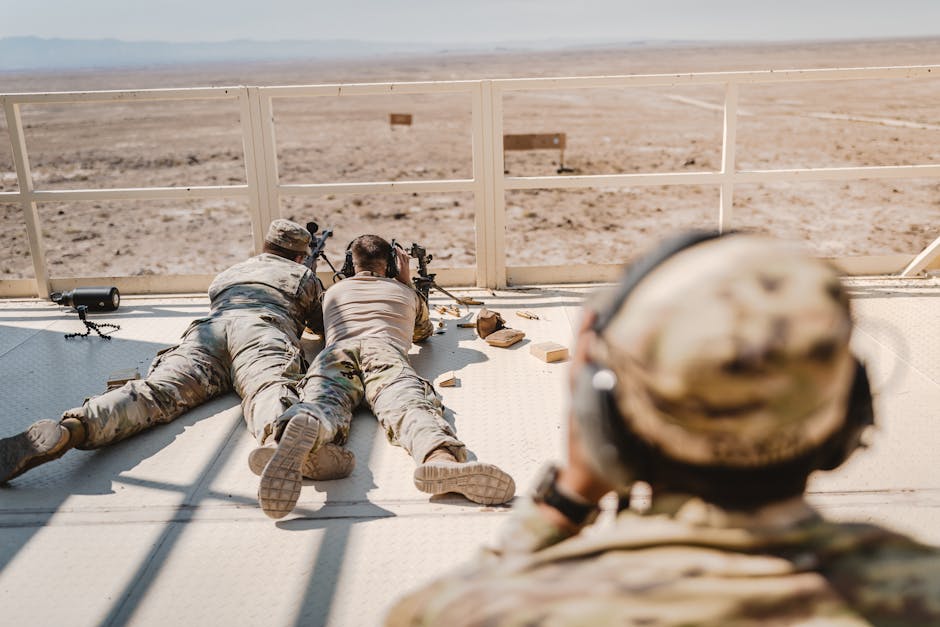
Large-Scale Military Drills Raise Regional Concerns
Military exercises have long served as a cornerstone of defense preparedness and alliance cooperation, but recent large-scale drills across multiple regions have sparked heightened concerns among neighboring nations and international observers. These extensive operations, involving thousands of troops, advanced weaponry, and sophisticated technology, are reshaping regional security dynamics and fueling diplomatic tensions in various parts of the world.
The Scale and Scope of Modern Military Exercises
Contemporary military drills have evolved significantly from their traditional counterparts, now incorporating multi-domain operations that span land, sea, air, cyber, and space capabilities. Recent exercises have demonstrated unprecedented complexity, with some involving tens of thousands of personnel, hundreds of aircraft, and numerous naval vessels operating simultaneously across vast geographical areas.
These operations typically include live-fire exercises, amphibious assault simulations, air defense scenarios, and joint task force coordination drills. The integration of cutting-edge technology, including unmanned systems, electronic warfare capabilities, and advanced missile defense systems, has added new dimensions to these military showcases. Nations conducting these exercises often emphasize their defensive nature and the importance of maintaining operational readiness in an increasingly complex security environment.
Regional Hotspots and Escalating Tensions
Several regions worldwide have witnessed intensified military drill activities that have raised particular concern among neighboring states and the international community. The Asia-Pacific region has seen multiple large-scale exercises conducted by major powers and their allies, often in disputed waters or near contested territories. These operations frequently prompt strong diplomatic protests and counter-exercises from rival nations.
In Eastern Europe, extensive military maneuvers near sensitive borders have heightened anxieties and led to increased military posturing from multiple parties. The frequency and proximity of these drills to international boundaries have created situations where miscalculation or misunderstanding could potentially lead to unintended escalation.
The Middle East continues to experience regular large-scale military exercises, with regional powers demonstrating their capabilities amid ongoing conflicts and strategic rivalries. These drills often involve sophisticated weapons systems and reflect the complex web of alliances and opposition that characterizes the region’s security landscape.
Strategic Messaging and Deterrence
Military drills serve multiple strategic purposes beyond training and readiness. They function as powerful tools for signaling resolve, demonstrating capabilities, and projecting power. Nations conducting these exercises often aim to:
- Reassure allies of security commitments and partnership strength
- Deter potential adversaries by showcasing military capabilities
- Test and validate new equipment, tactics, and operational concepts
- Enhance interoperability between allied forces
- Assert territorial claims or challenge rival assertions
- Respond to perceived threats or provocations from competing powers
However, this strategic messaging can be interpreted differently by various parties, leading to what security analysts call the “security dilemma,” where defensive measures by one nation are perceived as offensive threats by others, potentially triggering an arms race or escalatory cycle.
International Response and Diplomatic Implications
The international community has responded to these large-scale military drills with varying degrees of concern. International organizations, including the United Nations, have called for transparency, communication, and restraint to prevent misunderstandings that could lead to conflict. Regional security forums have emphasized the importance of confidence-building measures and prior notification of major military activities.
Diplomatic channels have been activated repeatedly as nations seek clarification about the intent and scope of exercises conducted near their territories. Some countries have lodged formal protests, claiming that certain drills violate international norms or agreements. Others have responded by conducting their own exercises, creating a cycle of action and reaction that further complicates regional security dynamics.
Economic and Humanitarian Considerations
Beyond immediate security concerns, large-scale military exercises carry significant economic implications. The substantial financial resources required to conduct these operations represent considerable defense expenditures that might otherwise be allocated to domestic priorities. For nations with limited budgets, the pressure to maintain military readiness through regular exercises can strain economic resources.
Humanitarian organizations have also expressed concerns about certain military drills, particularly those conducted near civilian populations or in environmentally sensitive areas. Disruptions to fishing industries, commercial shipping routes, and civilian air traffic have been documented as consequences of extensive military exercises in various regions.
The Role of Technology and Future Trends
Advanced technology is transforming the nature of military exercises and the concerns they generate. The integration of artificial intelligence, autonomous systems, and cyber capabilities has introduced new uncertainties into regional security calculations. Nations are increasingly conducting exercises that simulate operations in contested digital domains, raising questions about the boundaries between peacetime activities and potential acts of aggression.
Future military drills are expected to incorporate even more sophisticated technologies, including hypersonic weapons, directed energy systems, and space-based assets. This technological evolution may further complicate efforts to maintain regional stability and prevent misunderstandings.
Paths Forward: Dialogue and Transparency
Security experts emphasize that managing concerns about large-scale military drills requires sustained dialogue, transparency mechanisms, and confidence-building measures. Establishing clear communication channels, providing advance notice of major exercises, inviting observers, and engaging in mutual consultations can help reduce tensions and prevent miscalculation.
Regional security architectures that facilitate discussion of military activities and promote mutual understanding remain essential for maintaining stability. While military preparedness remains a legitimate national security priority, balancing deterrence with reassurance continues to challenge policymakers worldwide as large-scale drills become increasingly common features of the global security landscape.