
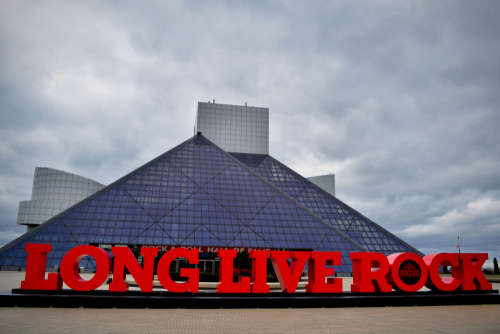
The legendary KISS bassist just reignited a culture war that reveals how American institutions betray their own identities in the name of fashionable inclusivity.
When Genre Labels Actually Matter
Gene Simmons appeared on the Legends N Leaders podcast in February 2026 and delivered what critics call a racially charged assessment of the Rock and Roll Hall of Fame’s identity crisis. He stated plainly that hip-hop represents spoken-word art over beats, fundamentally different from rock’s integration of melody and instrumental arrangement. His question cuts to the heart of the institution: if genres are interchangeable, why not induct opera singers or classical composers? His comment about not coming “from the ghetto” triggered predictable outrage, but his core argument deserves examination beyond reflexive accusations.
The Timeline of Institutional Mission Creep
The Rock and Roll Hall of Fame launched in 1983 to celebrate rock and soul music. For decades, it maintained clear boundaries. Then, in 2007, Grandmaster Flash and the Furious Five became the first major hip-hop act inducted. Public Enemy followed in 2013, then N.W.A. in 2016, 2Pac in 2017, and the floodgates opened. By 2025, Salt-N-Pepa and OutKast joined legends like JAY-Z, Eminem, LL Cool J, and Missy Elliott. Meanwhile, Iron Maiden—who sold over 100 million albums of actual rock music—remains outside looking in. The institution fundamentally transformed its mission without changing its name.
The Philosophical Divide Exposed
Ice Cube offers the counterargument that rock and roll represents a rebellious spirit rather than a specific sound. He traces this ethos through blues, jazz, bebop, soul, and into hip-hop as a natural evolution. This philosophical flexibility sounds inclusive until you recognize it renders the word “rock” meaningless. If everything rebellious qualifies as rock, the category describes attitude rather than artistry. Simmons employs devastating logic here: why isn’t Led Zeppelin in a Hip-Hop Hall of Fame if spirit trumps sound? The silence following that question reveals the intellectual bankruptcy of the opposing position.
What Conservative Common Sense Reveals
Americans over forty remember when institutions maintained standards and categories meant something. The Rock Hall’s genre expansion reflects broader cultural patterns in which legacy institutions abandon their founding purposes to pursue contemporary relevance. Hip-hop deserves celebration—in its own hall, honoring its own pioneers. Creating separate institutions demonstrates respect for distinct artistic traditions rather than collapsing everything into generic “music appreciation.” Simmons faced immediate accusations of racism for defending categorical integrity, the predictable response when someone challenges institutional mission creep. His broader critique included opera and classical music, demonstrating principle rather than prejudice, but nuance rarely survives outrage cycles.
The Commercial Reality Nobody Mentions
Hip-hop dominates contemporary music commercially and culturally. The Rock Hall’s expansion into hip-hop inductions reflects institutional desperation for relevance among younger demographics who don’t purchase rock albums. This represents marketing dressed as inclusivity. Iron Maiden’s exclusion despite massive commercial success exposes the lie: the Hall doesn’t honor achievement within rock but rather chases cultural trends. If hip-hop deserves institutional recognition—and it does—then build institutions specifically to celebrate hip-hop’s pioneers and innovations. Forcing hip-hop into rock institutions diminishes both genres by suggesting neither merits dedicated recognition.
According to the Legends N Leaders Podcast, KISS bassist Gene Simmons is once again questioning why rap and hip‑hop artists are included in the Rock & Roll Hall of Fame, reigniting a debate he’s been vocal about for nearly a decade.
Simmons said: “Hip‑hop does not belong in the… pic.twitter.com/w7kjCAV8oS
— Rock Feed 🎸 (@RockFeedNet) February 11, 2026
Why This Matters Beyond Music
The Simmons controversy illustrates how American institutions surrender their identities to avoid accusations of exclusion. Churches become community centers. Universities abandon academic rigor for social justice. Now the Rock and Roll Hall of Fame inducts artists who neither play rock instruments nor identify primarily as rock musicians. This pattern repeats across every traditional institution facing pressure to demonstrate “relevance” to generations that are uninterested in its original purposes. Simmons stands nearly alone among rock legends willing to articulate what millions recognize: categories serve important cultural functions, and destroying them creates confusion rather than unity. The Rock Hall won’t respond because institutions captured by ideological fashion can’t defend their contradictions without exposing their abandonment of founding principles.
Sources:
Gene Simmons Doubles Down On Belief Hip-Hop Does Not Belong In Rock Hall Of Fame – That Grape Juice
Gene Simmons Rants About Hip-Hop Being in the Rock and Roll Hall of Fame – Louder Sound