
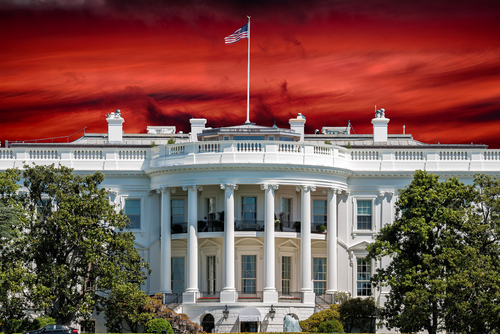
The arraignment of an Afghan national accused of a deadly shooting near the White House sends shockwaves, as the judge delivers a significant blow to his defense.
Legal Proceedings and Bail Denial
On December 2, 2025, Rahmanullah Lakanwal appeared remotely from a hospital bed at his arraignment for the deadly shooting of two West Virginia National Guard members near the White House. Before D.C. Superior Court Judge Renee Raymond, Lakanwal pled not guilty to first-degree murder, assault with intent to kill, and illegal possession of a firearm. Judge Raymond, emphasizing the severity of the charges and the risk posed to public safety, denied his request for bail. This decision marks a significant setback for Lakanwal’s defense team.
The denial of bail reflects the gravity of the accusations against Lakanwal, who stands accused of a politically charged crime with implications for national security and immigration policy. The judge’s decision underscores the judiciary’s role in balancing the rights of the accused with public safety concerns, especially in cases involving violent crimes near symbolic locations like the White House. The arraignment has further intensified scrutiny on immigration policies, particularly for individuals with backgrounds similar to Lakanwal’s.
Background and Context
The incident that led to Lakanwal’s arraignment occurred on November 26, 2025, when he allegedly ambushed Specialist Sarah Beckstrom and Staff Sergeant Andrew Wolfe near the Farragut West Metro Station. Beckstrom succumbed to her injuries a day later, while Wolfe remains in serious condition but shows signs of improvement. The attack, carried out by a recently resettled Afghan national, has become a flashpoint in debates over immigration policy and domestic military deployments, especially given its proximity to the White House.
Lakanwal entered the U.S. under the Operation Allies Welcome program, designed to assist vulnerable Afghans. His case has sparked controversy over the vetting processes for immigrants and the mental health support provided to individuals resettling in the U.S. The shooting occurred during a period of heightened political tension, with National Guard troops deployed to D.C. under a controversial order by President Trump. This deployment was already under legal scrutiny, adding another layer of complexity to the unfolding events.
Stakeholders and Their Roles
Several key figures and organizations are involved in this case. Rahmanullah Lakanwal, the accused shooter, is a former CIA contractor whose motivations are under investigation by the FBI. The victims, Specialist Sarah Beckstrom and Staff Sergeant Andrew Wolfe, are central to the case, with Beckstrom’s family seeking justice and Wolfe’s recovery closely monitored. Judge Renee Raymond plays a pivotal role in ensuring a fair legal process while prioritizing public safety.
President Trump and his administration have leveraged the incident to push for stricter immigration and security policies. The West Virginia National Guard, directly affected by the attack, has been active in supporting the victims’ families. The U.S. Department of Justice and the FBI are leading the investigation, focusing on Lakanwal’s background, potential radicalization, and motives. This case highlights the complex interactions between national security, immigration policy, and the judiciary.
Current Developments and Future Implications
Lakanwal remains hospitalized and under guard, facing multiple charges. The FBI continues to investigate his background and any possible radicalization. Recent developments include Wolfe showing signs of improvement, giving hope to his family and colleagues. The ongoing investigation is crucial in understanding the motives behind the shooting, with no confirmed links to terrorist networks so far.
The implications of this case are significant both in the short and long term. In the immediate aftermath, increased security measures have been implemented in D.C., and there is heightened scrutiny of Afghan immigrants. Politically, this incident has fueled debates over immigration vetting and the legality of domestic military deployments. Long-term, there may be reforms in immigration processes and mental health screening for refugees and asylum seekers, reflecting broader concerns over national security and public safety.