

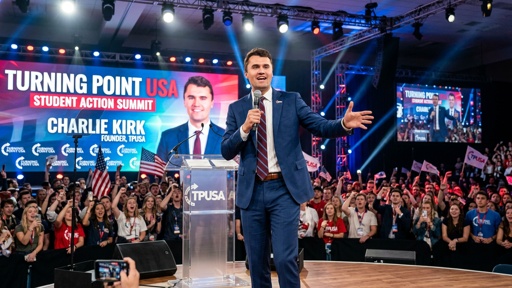
A high-profile debate over what really happened to Charlie Kirk is colliding with doubts about a disputed “successor” video and raises bigger questions about how quickly the public is asked to accept official stories.
Story Snapshot
- Candace Owens says a viral video of Charlie Kirk naming a successor is likely inauthentic and cites unnamed sources about his actual view [1].
- Coverage describes claims that a Turning Point board member discussed estate planning indicating Kirk’s wife would take charge if needed [1].
- Owens publicly challenges the government narrative about the killing and speculates about alternative culprits, without offering direct evidence [2].
- Hunter Biden’s appearance on a podcast tying him to Trump, Kirk, and Jeffrey Epstein shows the story’s national, partisan reach [3].
What Owens Claimed About the Successor Video
Candace Owens told listeners that a video circulating online, allegedly showing Charlie Kirk naming a successor, is likely not authentic, citing “people with direct knowledge.” She added those sources said Kirk’s actual response to a succession question was that he trusted his lieutenants to decide in his absence [1]. That framing, if accurate, undercuts the video’s evidentiary value and reinforces skepticism about how quickly onlookers embraced a convenient narrative based on an artifact whose provenance remains contested [1].
Owens’s account also referenced a Daily Mail claim that an anonymous Turning Point board member discussed personal financial and estate planning with Kirk and his wife after their marriage, and that the couple made clear his wife would be responsible for the organization if something happened to him [1]. Owens summarized that the board “already knew” the plan, suggesting internal consensus existed [1]. These statements, relying on unnamed sources and secondary reporting, invite follow-up requests for original documents, minutes, or sworn declarations to verify specifics.
📑 Hunter Biden and Candace Owens Discuss the Discrepancies in the Charlie Kirk Case
Candace: "We sort of all looked up at the machine and were like what is this?"
Hunter: "These are the people that Charlie Kirk made — the level of disloyalty, or fear, I don't know what it is." pic.twitter.com/oL1pTtojuK
— CANDACE (@candaceoshow) May 22, 2026
Speculation Versus Evidence in the Public Narrative
Local coverage cataloged Owens’s broader assertions challenging the government’s account and her belief that the named suspect may not be the killer, while acknowledging her statements are speculative and unsupported by disclosed evidence [2]. The outlet reported Owens suggested Kirk could have been “taken down by a military,” implied possible Israeli involvement, and said people close to him betrayed him, but did not provide corroborating records or witnesses [2]. Those claims, presented as opinion, highlight the gap between provocative theory and verifiable proof.
The available record in these sources does not provide autopsy results, ballistics, chain-of-custody logs, or court filings that contradict the official narrative or substantiate alternative theories [1][2]. Assertions about an inauthentic video, unnamed insiders, and estate-planning conversations speak to organizational dynamics, not forensics. Without primary investigative materials, neither supporters nor skeptics can test central contentions about motive, means, or participants, leaving audiences to navigate trust, partisanship, and incomplete disclosures [1][2].
Why This Resonates Across Ideological Lines
The dispute taps into a larger American frustration: institutions ask citizens to accept conclusions before records are public. Conservatives see a media ecosystem quick to dismiss inconvenient facts; liberals see power brokers shaping narratives to protect elites. Here, the successor-video controversy and anonymous-sourcing claims feed perceptions that the truth is filtered through gatekeepers. That distrust grows when high-profile figures, from Owens to Hunter Biden’s podcast appearance, amplify the story across partisan channels without settling key evidentiary questions [1][2][3].
Reasonable next steps exist that respect both transparency and due process. Parties could seek the original successor video file and metadata for forensic authentication; obtain sworn, on-the-record statements from Turning Point leadership or board members about any succession planning; and press for release of investigative materials through public records where legally permissible. Until then, the strongest on-record facts are narrow: the successor video is disputed, succession anecdotes rely on unnamed sources, and speculation has outpaced verifiable evidence [1][2].
Sources:
[1] Web – Hunter Biden Returns. The White House Ghosts Me Regarding Erika…
[2] Web – Candace Owens to interview Hunter Biden – 13WHAM
[3] YouTube – Hunter Biden on Donald Trump, Charlie Kirk and Jeffrey Epstein